
By Ted Spence
Since last June we have experienced exceptional lake levels and outstanding water management by the Trent-Severn Waterway (TSW) water management team.
Summer 2025 Extreme Low Water levels under Drought Conditions
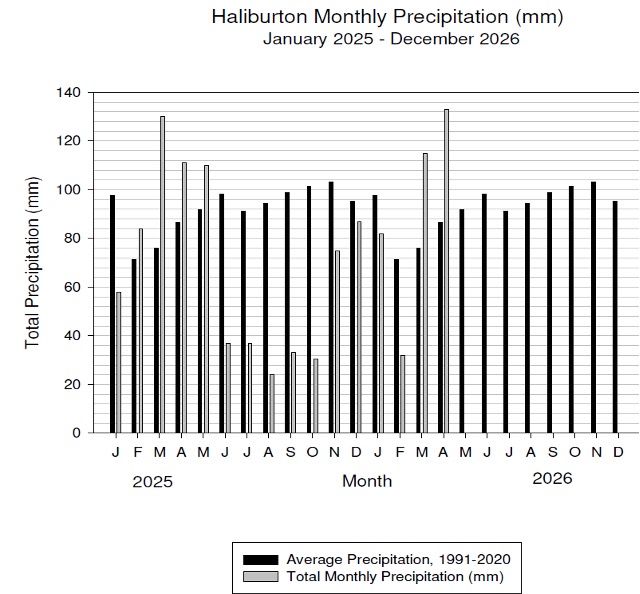
In summer 2025 we experienced very low water levels as a result extremely dry summer. By May 2025 the entire TSW system was seeing normal water levels but then in the last week an extreme rainfall resulted in the partial closure of part of the system because of high flows. But that was the only significant rainfall for the rest of the summer. In each of the five months from June to October we received less than 50% of our normal rainfall and these conditions were general across the whole Trent drainage area. See figure 1 below.
Figure 1
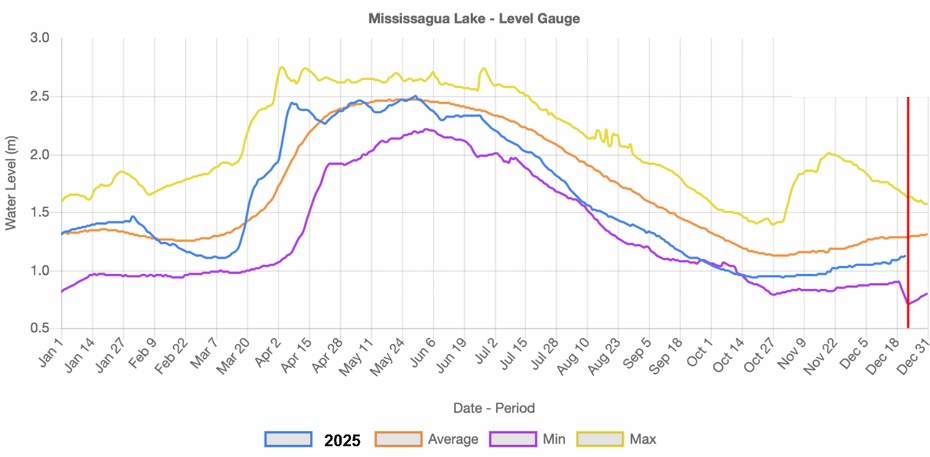
These conditions resulted in our water levels being below normal levels throughout the season from July until mid October. See Figure 2 below. By mid August our level was as low as it has ever been at that date as documented in the water level graph. However TSW was able conserve water by limiting the flows downstream through the Kawartha Lakes and Otonabee river to the minimum required to support Peterborough’s municipal water supply which is drawn from the river. That flow is also enough to sustain the navigation in the waterway with careful management of all the dams and locks. All reservoirs saw the same low levels but were managed so as not to go below the long term extremes on record. By September TSW was also reducing the levels on some of the deeper Kawartha Lakes to maintain the minimum flow while still supporting navigation.
Figure 2
On our lake we all had to adjust our waterfront activities to account for the conditions with some folks having to move or remove docks and withdraw their boats earlier than normal.
Our lake reached its minimum level by mid October which is always the target date to protect trout spawning. From that point on the level was gradually managed upward reaching normal levels early in January.
The summer 2025 experience was truly exceptional with less that half the normal rainfall over 5 consecutive months. TSW did an exceptional job balancing demands and avoiding record low levels.
Spring 2026 Very High Water Levels with Ice still on the Lake
In Spring 2026 we have had extreme conditions resulting in high water levels and serious flooding in some areas particularly in the Northern reservoirs. Referring back to Figure 1 above you can see that the precipitation levels through November, December and January were closer to normal followed by a dryer February and then exceptionally wet conditions in March and April. We had a significant average or above average snowpack through to mid March. Figure 3 is a Table recording information on the precipitation patterns in 2026 so far.
Figure 3
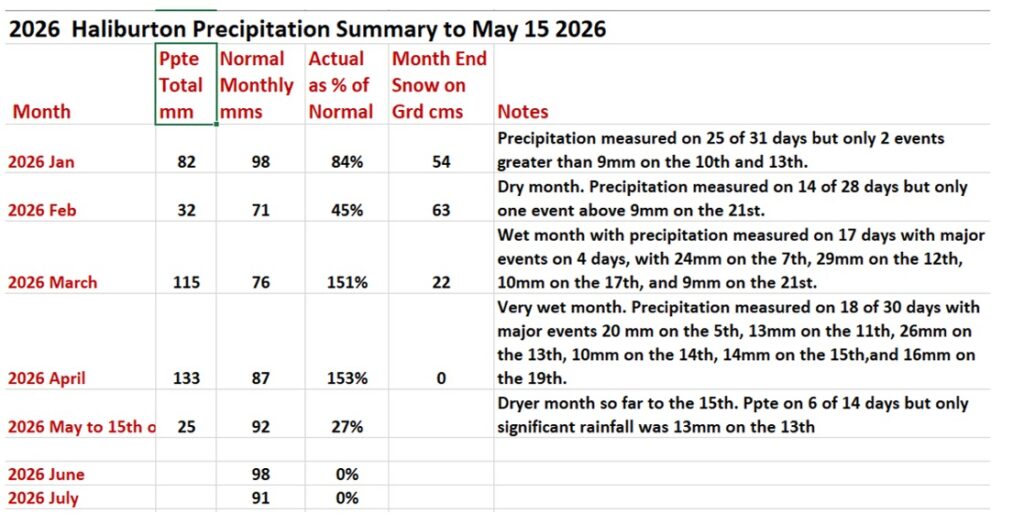
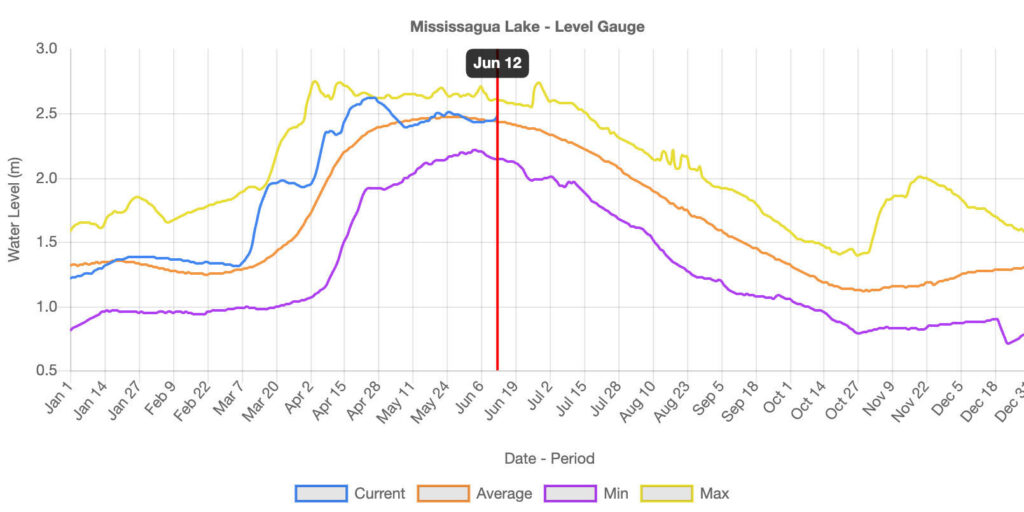
Figure 4 is the water level graph for 2026. Our water level was close to average levels through to early March at which point the level began to rise with major rainfall events onto the snow and warmer temperatures resulting in significant early snow melt. March saw precipitation on 17 days including 4 major events. By month’s end the snowpack in our area was much less than it had been. In March the TSW actively managed our dam and dams on other reservoirs to ensure that the runoff was not lost. By mid-month they began releasing water and stabilizing levels so as to avoid extreme levels with the ice still on the lake however this meant high river flows.
Figure 4
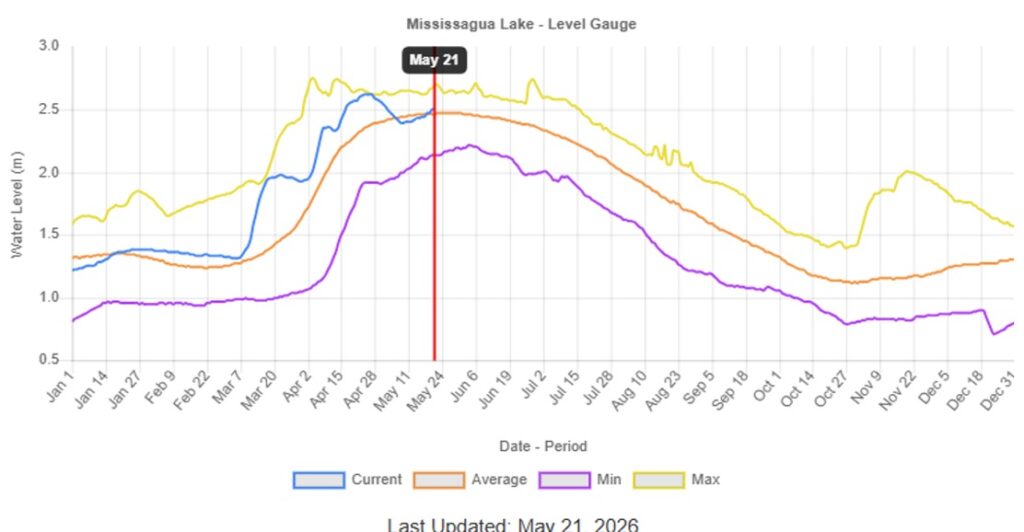
April was a very wet month with 18 days with Precipitation including several major rainfall events onto the remaining snow. Between the 11th and 19th we received a total of over 80mm of rainfall which resulted in very significant runoff across the Mississagua drainage area causing a steep rise in water levels. At this point TSW had to add logs to the dam to limit the downstream flows to balance the high flows coming from all parts of the basin. Further north particularly in the Gull River system above Minden where there was still more snowpack melting and the flows were extreme and there was flooding.
In May TSW has actively managed levels and flows to get things back to normal in time to open navigation on the 15th. All reservoirs were above normal at end of April but were managed back to normal spring levels by later in May. This resulted in delays in getting docks into position and launching boats. This was a particular issue at the Catchacoma marina where a new dock system was being installed. Again in Spring as was the case last summer TSW Water Management Team was able to manage the runoff or lack of it from extreme weather patterns to get us back near normal before the May holiday.